


Blog
How to Tell If a Pokémon Card Will Become Valuable: A 4-Factor Framework
Before Cardian, I spent over a decade as an equity analyst — building models and making decisions with clear, consistent frameworks. This guide is my attempt to bring that discipline to a question every collector asks: out of millions of Pokémon cards, how do you tell which ones will hold or grow their value?
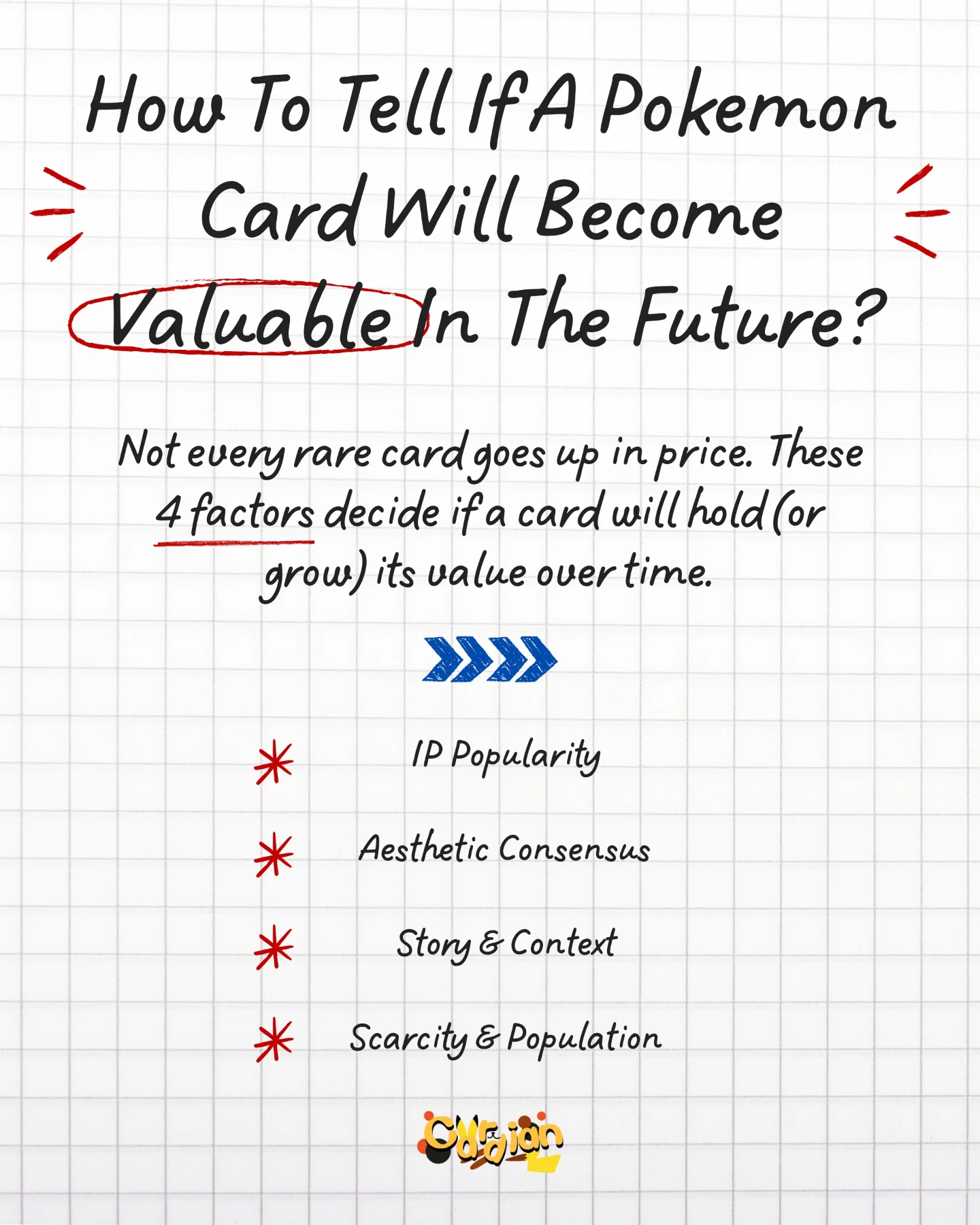
Not every rare card goes up. In our experience, four factors decide whether a card becomes a future collectible or just an expensive piece of cardboard.
Factor 1: IP Popularity — the Fanbase Never Sleeps
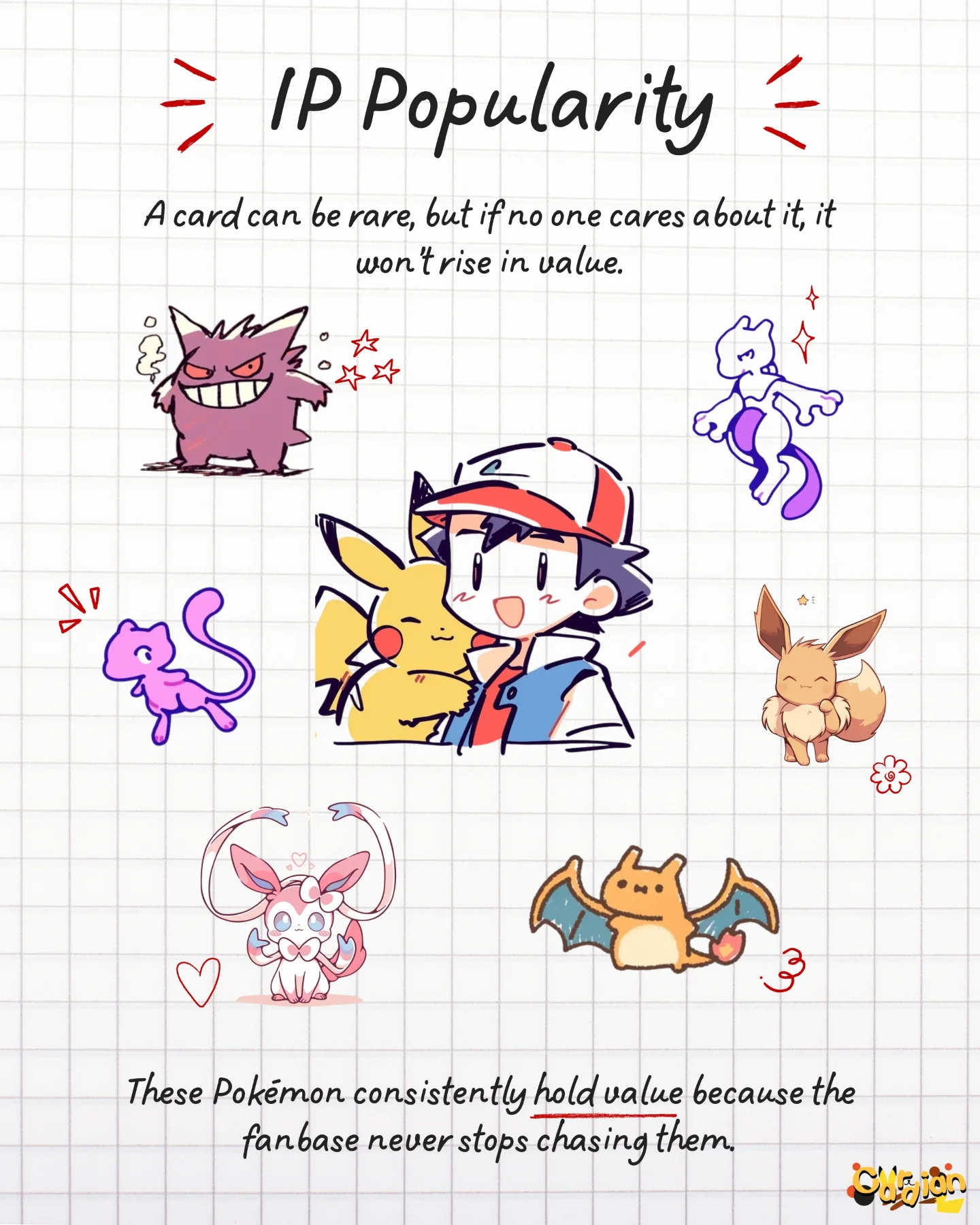
A card can be genuinely rare, but if nobody cares about the Pokémon on it, it won’t rise in value. A small set of characters — Charizard, Pikachu, Mewtwo, Mew, Gengar, Eevee and the Eeveelutions — consistently hold value because their fanbases never stop chasing them. When you’re weighing two equally rare cards, the one wearing an evergreen face wins almost every time.
Factor 2: Aesthetic Consensus — Beauty Is Demand
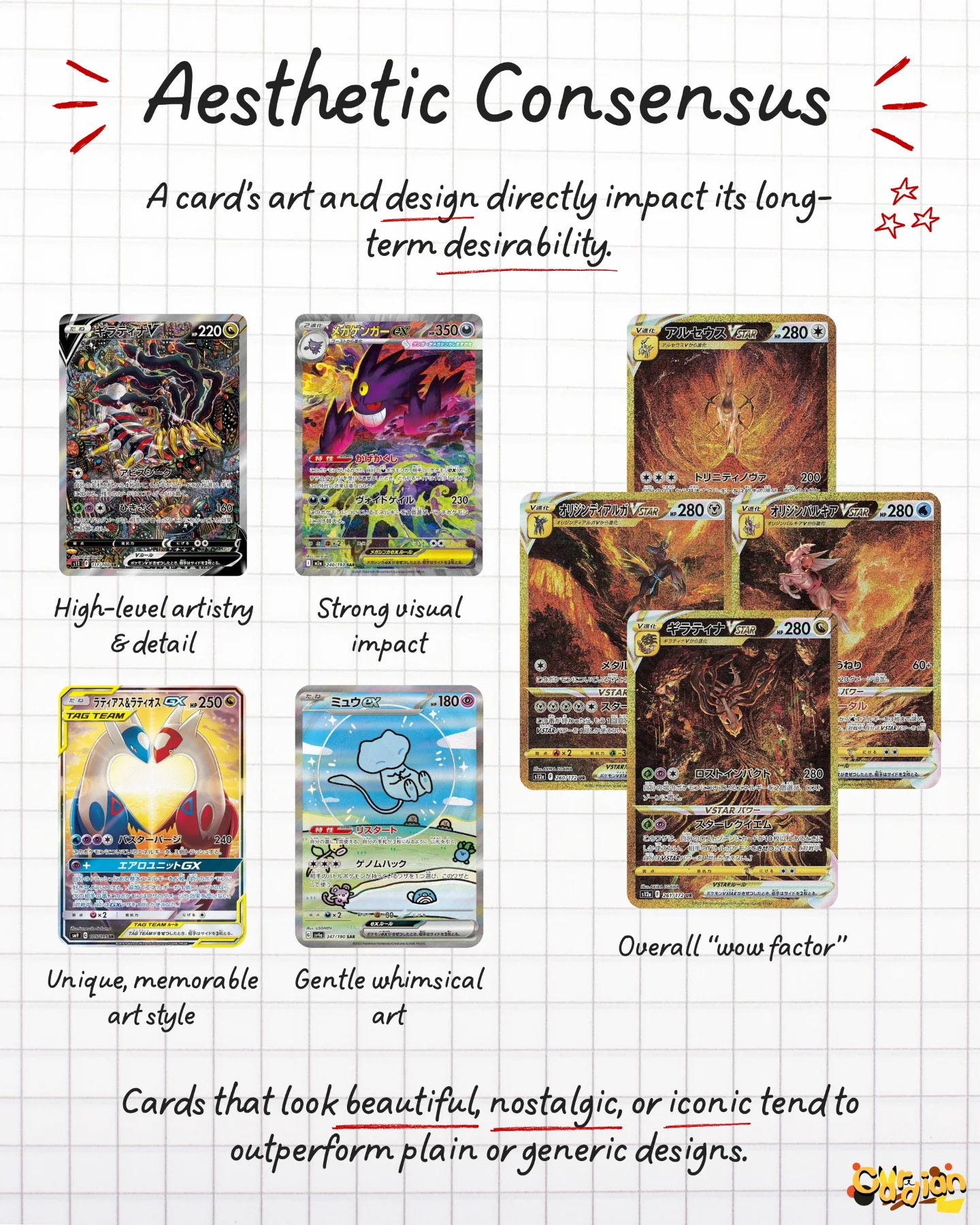
A card’s art and design directly drive long-term desirability. What the market consistently rewards: high-level artistry and detail, strong visual impact, a unique and memorable style, gentle whimsical charm — and above all, an overall “wow factor” you feel at first glance. Cards that look beautiful, nostalgic or iconic tend to outperform plain and generic designs, year after year.
Factor 3: Scarcity & Population — the Rarity Math
Rarity isn’t just “holo or not” — what matters is how many copies exist in high grade. At the extreme, the Illustrator Pikachu with a PSA 10 population of one last sold for a reported S$16 million. Extremely low populations create extremely low liquidity, and prices can skyrocket when strong IP and story meet.
Here’s the framework we use: the higher a card’s population, the more of the other factors it needs to succeed.
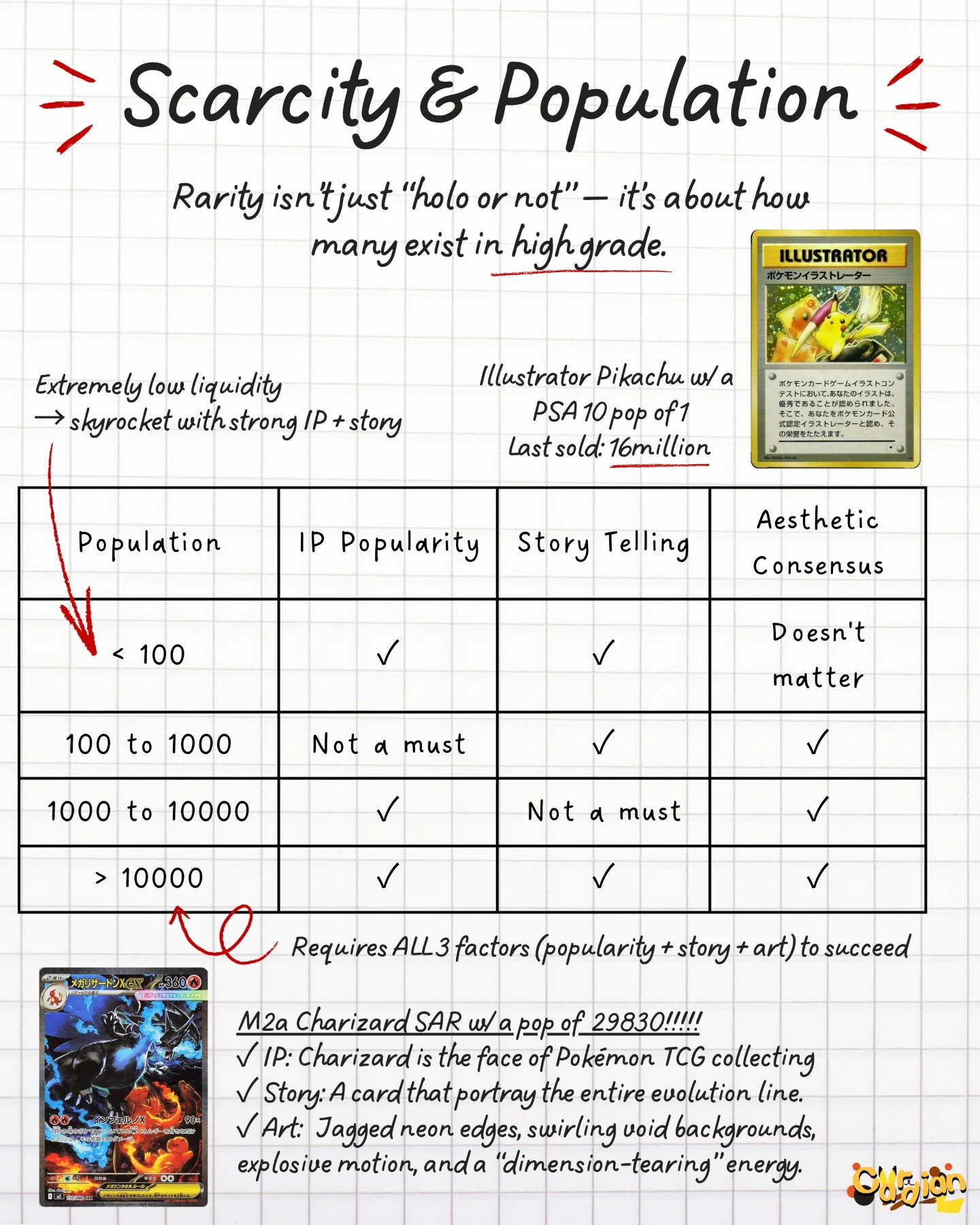
| PSA 10 Population | IP Popularity | Story | Aesthetics |
|---|---|---|---|
| Under 100 | Required | Required | Doesn’t matter |
| 100 – 1,000 | Not a must | Required | Required |
| 1,000 – 10,000 | Required | Not a must | Required |
| Over 10,000 | Requires all three — popularity, story AND art | ||
A live case study: the M2a Mega Charizard SAR carries a huge population of 29,830 — yet it works, because it checks every box. IP: Charizard is the face of Pokémon collecting. Story: the card portrays the entire evolution line. Art: jagged neon edges, swirling void backgrounds and “dimension-tearing” energy.
Factor 4: Story & Context — History Makes Legends
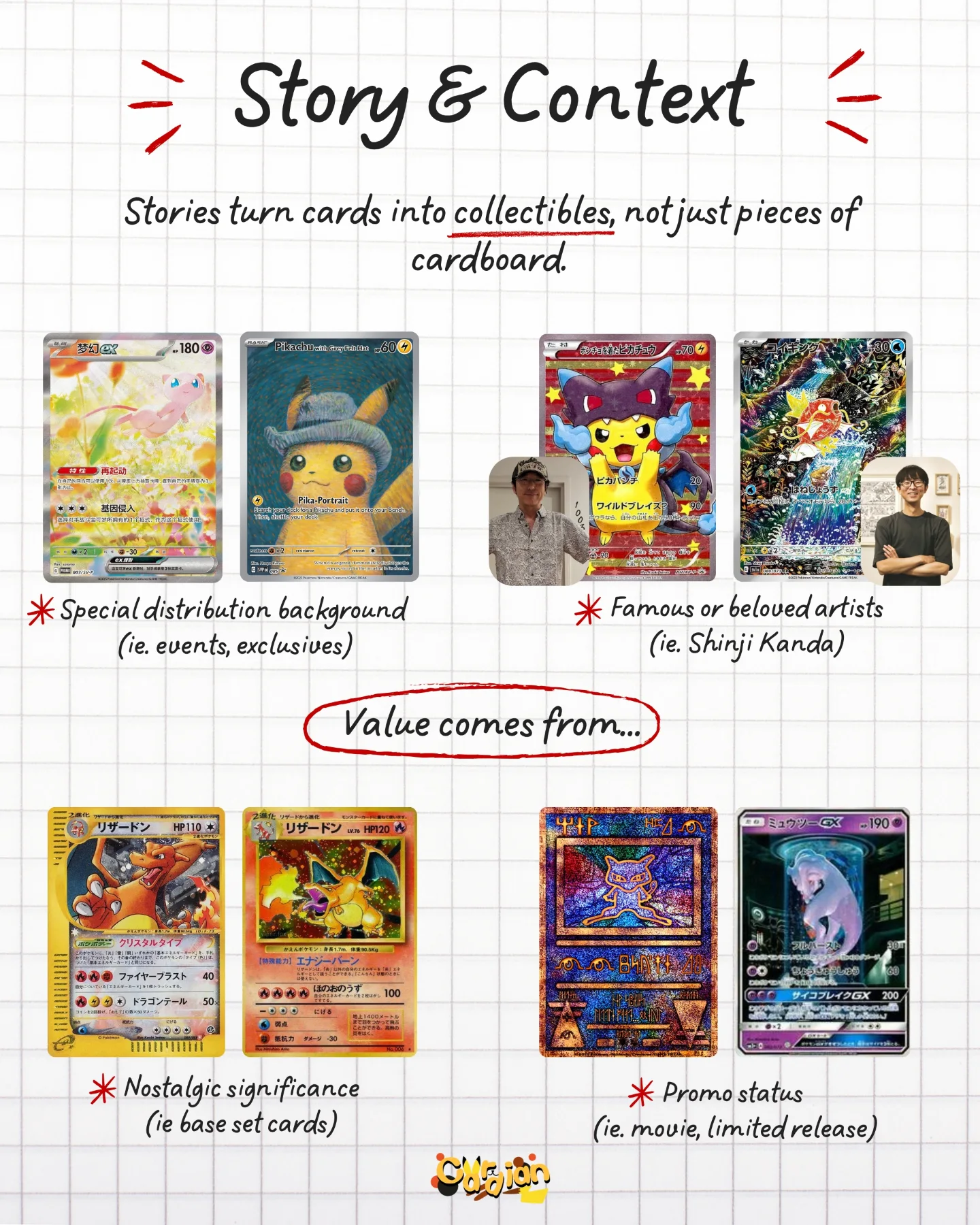
Stories turn cards into collectibles instead of cardboard. Value comes from special distribution backgrounds (event and lottery exclusives), famous or beloved illustrators (think Shinji Kanda), nostalgic significance (Base Set cards), and promo status tied to movies or limited releases. Two cards can be equally scarce — the one with a story behind it becomes the legend.
The Formula
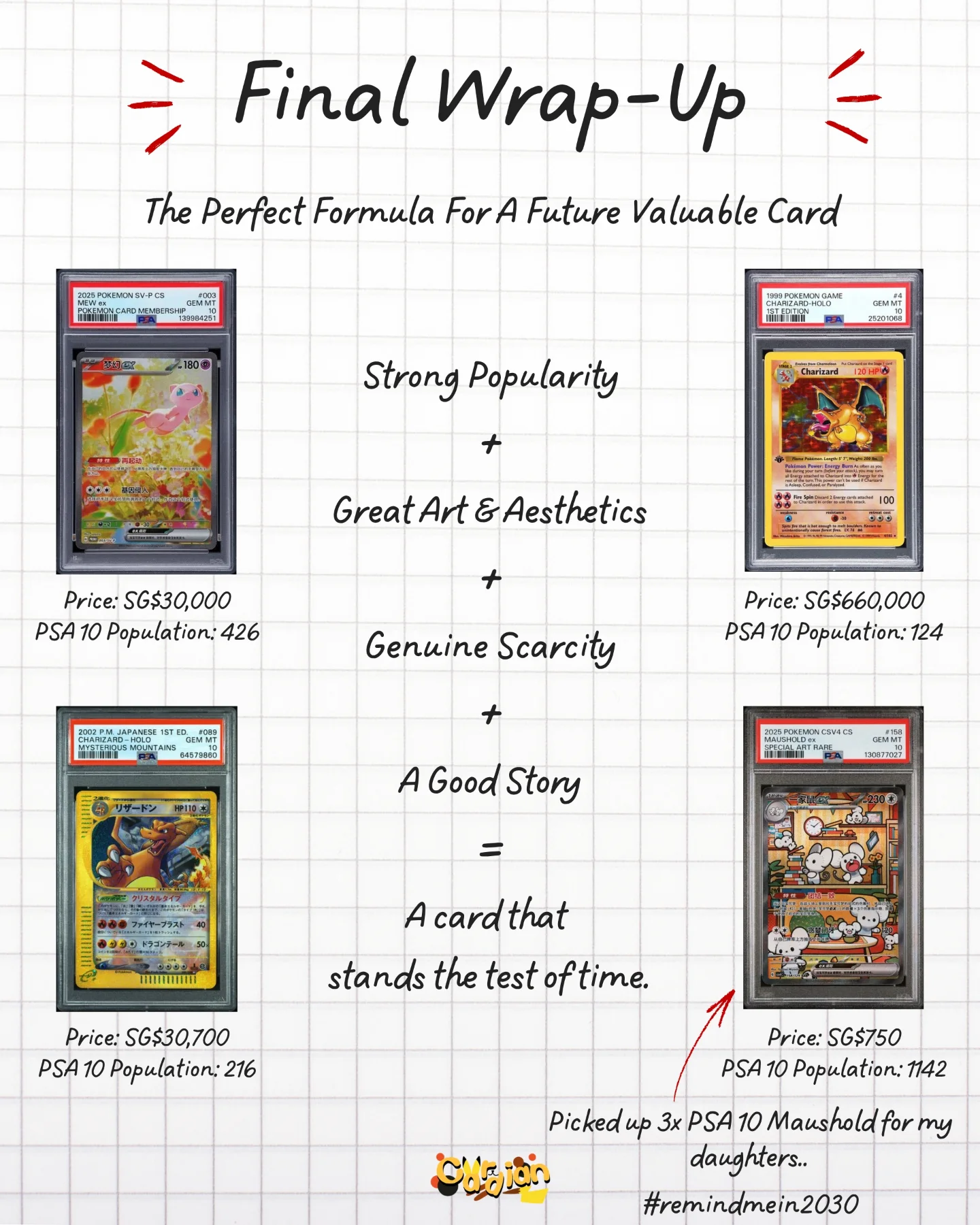
Strong popularity + great art + genuine scarcity + a good story = a card that stands the test of time.
The proof is in the all-time greats: a Base Set Charizard at S$660,000 with a PSA 10 population of 124, or vintage grails trading above S$30,000 on populations in the low hundreds. And the formula scales down, too — we picked up three PSA 10 Maushold copies (S$750, population 1,142) for my daughters. Ask us how that went in 2030.
If you want to see the framework applied to live market situations, read our companion pieces: price vs rarity and the 5,000-population rule, and the story of Forestchu, the Pikachu almost nobody can pull.
FAQ
What makes a Pokémon card valuable long-term?
Four factors working together: an evergreen, popular Pokémon; art with broad aesthetic appeal; genuine scarcity in high grades (PSA 10 population); and a story — special distribution, a famous artist, or nostalgic significance.
Does rarity alone make a card valuable?
No. A rare card nobody cares about stays cheap. Scarcity only translates into value when demand — popularity, aesthetics or story — exists to meet it.
What counts as a low PSA 10 population?
Under 100 is exceptional (story and IP take over from there). Under 1,000 is genuinely scarce for a modern card. Above 10,000, a card needs popularity, story and art all working together to appreciate.
Can a high-population card still be a good buy?
Yes — if it checks every other box. The M2a Mega Charizard SAR has a 29,830 PSA 10 population but combines the most popular Pokémon in the hobby, full-evolution-line storytelling and standout art.
Ready to apply the framework? Browse our Pokémon singles and PSA & CGC graded slabs — every card at Cardian is population-checked before we price it. Follow @cardian.sg for more frameworks like this one.