


Blog
The Latias & Latios GX Case Study: What Pokémon TCG’s Three Major Markets Reveal
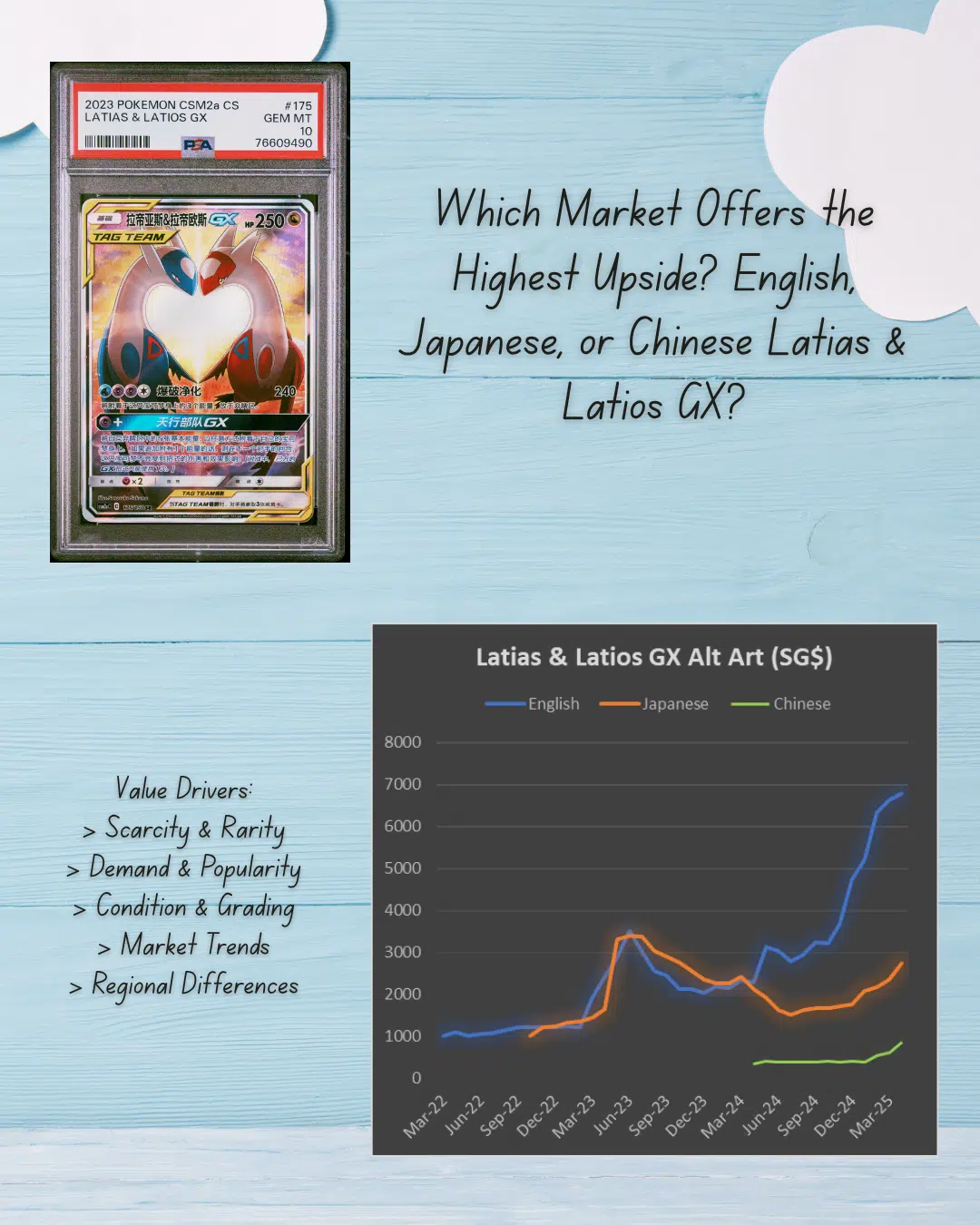
Key Takeaways:
- Chinese Pokémon TCG market shows unprecedented growth patterns
- English cards demonstrate stable, long-term appreciation
- Japanese market remains volatile but strategically important
- All three markets now entering critical growth phases
A New Contender Emerges
When Pokémon TCG officially launched in China in late 2022, it created an entirely new collecting landscape. The Latias & Latios GX card provides particularly valuable insights, with versions available across all three major markets – English (2019), Japanese (2018), and now Simplified Chinese (2023).
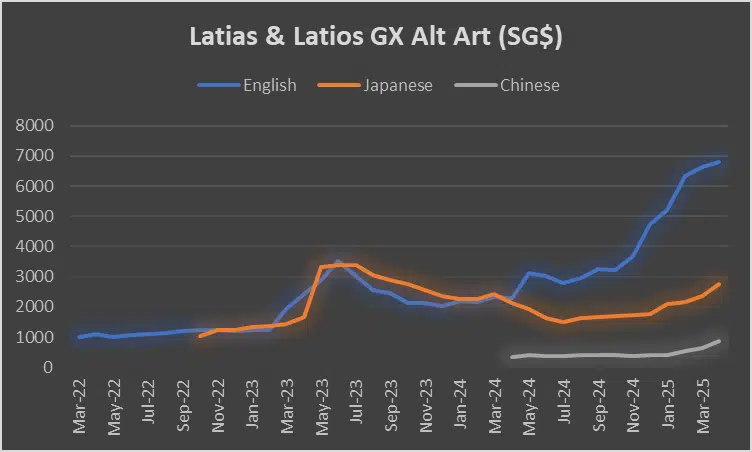
Note: As of 28 April 2025 | Data from Ebay Last Sold; Cardian
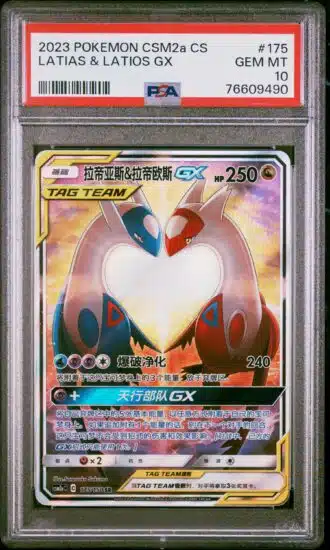
PSA 10 Latias & Latios GX Chinese
Growth Patterns Tell the Story
Our tracking of available market data reveals distinct trajectories:
-
- English Market (+577% since 2022)
The steady climber, showing consistent appreciation with less volatility. This reflects mature market dynamics where collectors prioritize long-term holds.
- English Market (+577% since 2022)
-
- Japanese Market (+170% with significant swings)
Peaked dramatically in 2023 before correcting, demonstrating the volatility of a market driven by both collectors and speculators.
- Japanese Market (+170% with significant swings)
-
- Chinese Market (+151% in just one year)
The newcomer showing the most explosive growth, potentially compressing years of typical appreciation into a much shorter timeframe.
- Chinese Market (+151% in just one year)
Why This Matters for Collectors
Several critical factors emerge from this comparison:
-
- The “two-year rule” appears to hold – cards typically accelerate in value after this period when reprint risks diminish
- Market maturity significantly affects price stability
- New markets may offer different risk/reward profiles for strategic collectors
Strategic Considerations
For those building or managing collections, this analysis suggests:
-
- English cards may represent the “blue chip” option
- Japanese versions offer trading opportunities but require timing
- Chinese cards present an intriguing growth story, though with less historical precedent